



We believe America is headed for a major financial crisis. If that happens, it is likely to result in a global depression, more international conflicts, a reduced international standing, and serious challenges to our domestic tranquility.
For the sake of our nation and our families, changing course is a moral imperative worthy of sacrifice. It demands that we act as faithful stewards, protecting the well-being of our country and of generations to come.
We are working to educate, engage, and activate the American people regarding the costs of inaction and the benefits of changing course. We have launched the 50millionamericans.org campaign as a foundation to build a public movement that will increase pressure on politicians to establish a bipartisan fiscal commission, enact No Budget, No Pay, and adopt a fiscal responsibility constitutional amendment that limits debt to a reasonable and sustainable share of GDP. The commission will be tasked with recommending legislative solutions to ensure the solvency and sustainability of Social Security and to reduce debt as a share of GDP to a reasonable level over the next 10 to 15 years.
To succeed, we need funding, the support of key leaders, an informed and mobilized public, courageous bipartisan leaders in Congress and state legislatures, and strong presidential leadership.
We the People is a nonpartisan 501(c)(3) nonprofit organization. We do not endorse candidates or contribute to political campaigns.

The Problem
$40T
The total federal debt passed $40 trillion in August 2026. By October 15, 2026, it had reached about $40.4 trillion, according to the U.S. Treasury.
About $32.5 trillion of that total is owed to investors outside the federal government. That amount is now roughly equal to everything the U.S. economy produces in a year.
The debt is not the only pressure on the budget. The trust fund that pays Social Security retirement benefits is projected to run out of reserves in late 2032. After that, incoming payroll taxes would cover only about 78 percent of scheduled benefits unless Congress acts.
The longer these problems go unaddressed, the larger the changes needed to fix them become.

Our Campaign:
50 Million Americans
50 Million Americans

50 Million Americans is our first public campaign. It is how we build the public support that the rest of our work depends on.
The campaign asks Americans to sign one simple pledge: if a candidate will not vote for the amendment, I will not vote for that candidate. Each person who signs is matched to their own congressional and state legislative districts. This lets us show elected officials, district by district, how many of their own voters stand behind the amendment.
The goal is to reach 50 million Americans. At that scale, support for the amendment becomes something no elected official can ignore.
The campaign is chaired by David M. Walker, former Comptroller General of the United States.

A Fiscal Responsibility Amendment
A Fiscal Responsibility Amendment
Our solution: a constitutional amendment that limits federal debt to a responsible percentage of the economy (GDP). A limit written into the Constitution would hold no matter which party controls Congress or the White House.
How the Constitution allows it. Article V gives two ways to propose an amendment. Congress can propose one with a two-thirds vote in both houses. Or, when two-thirds of the states (34) apply for one, Congress must call a convention of the states to propose amendments. Either way, an amendment takes effect only after three-quarters of the states (38) ratify it.
History. All 27 amendments to the Constitution so far were proposed by Congress. The convention route has never been used. The founders included it for times when Congress will not act on a problem that involves its own power, such as spending.
Where it stands today. The states have applied for a convention on fiscal responsibility for decades. According to the Federal Fiscal Sustainability Foundation, 39 states had active applications by 1979, and more than two-thirds of the states had active applications as recently as 2017. Congress has not called a convention. It did not even assign a committee to count state applications until 2015.
Why we pursue the convention route. Congress has had many chances to limit its own borrowing and has not done so. A convention lets the states propose the amendment directly. Most active state applications are limited to fiscal responsibility, which keeps the focus of a convention on this one issue.
No Budget,
No Pay
No Budget,
No Pay
Our solution: Congress should enact No Budget, No Pay as a permanent law. If Congress does not pass a budget on time, members of Congress do not get paid until it does. Most Americans do not get paid if they do not do their job, and Congress should be held to the same standard.
History. Congress has done this before. The No Budget, No Pay Act of 2013 passed the House 285 to 144 and the Senate 64 to 34, and it was signed into law on February 4, 2013. It required each chamber to pass a budget by April 15, 2013, or have its members’ pay held until it did. Both chambers passed a budget that spring.
Why it should be permanent. The 2013 law applied to one year only. A permanent law would make passing a budget on time the standard every year, not a one-time requirement.

A Bipartisan Fiscal Commission
A Bipartisan Fiscal Commission
Our solution: a bipartisan fiscal commission created by law. The commission would recommend specific solutions for Social Security and the other major drivers of the budget, including entitlements, military spending, and taxes. Congress would then be required to vote on its plan.
History. In 2010, the National Commission on Fiscal Responsibility and Reform, known as Simpson-Bowles, produced a detailed plan to reduce the debt. It won 11 of 18 votes, short of the 14 needed to send it to Congress, so Congress never voted on it. Because that commission was created by executive order rather than by law, Congress was never required to act.
Where it stands today. The Fiscal Commission Act has bipartisan sponsors in both chambers: H.R. 3289 in the House, introduced by Representatives Bill Huizenga and Scott Peters in May 2025, and S. 4012 in the Senate, introduced in March 2026. The bill would create a 16-member commission of 12 members of Congress and 4 outside experts. Its goal would be to bring the debt below 100 percent of GDP by 2039. Most importantly, it would require Congress to vote on the commission's plan without amendments and without delay. The Senate bill has been referred to committee and has not yet received a vote.
Why it matters. Social Security, Medicare, and the other largest parts of the budget are where the hardest choices are. A commission backed by public support, with a guaranteed vote, gives Congress a path to make those choices together.

Education:
Saving Social Security and America
Education:
Saving Social Security and America
David M. Walker and Joe Penland, Sr. are co-authors of the forthcoming book Saving Social Security and America's Future: Common Sense Solutions.
They are currently traveling the country on a speaking tour of the same name. The tour explains where Social Security stands, what happens if Congress does not act, and what fair, practical solutions could look like. On October 2, 2026, they presented at the Harvard Kennedy School.
David Walker served as a Public Trustee for Social Security and Medicare from 1990 to 1995. Joe Penland grew up in a family that relied on Social Security after his father passed away, and he has made protecting the program a personal priority.
To invite David Walker and Joe Penland to speak to your group, contact us using the information below.
Leadership
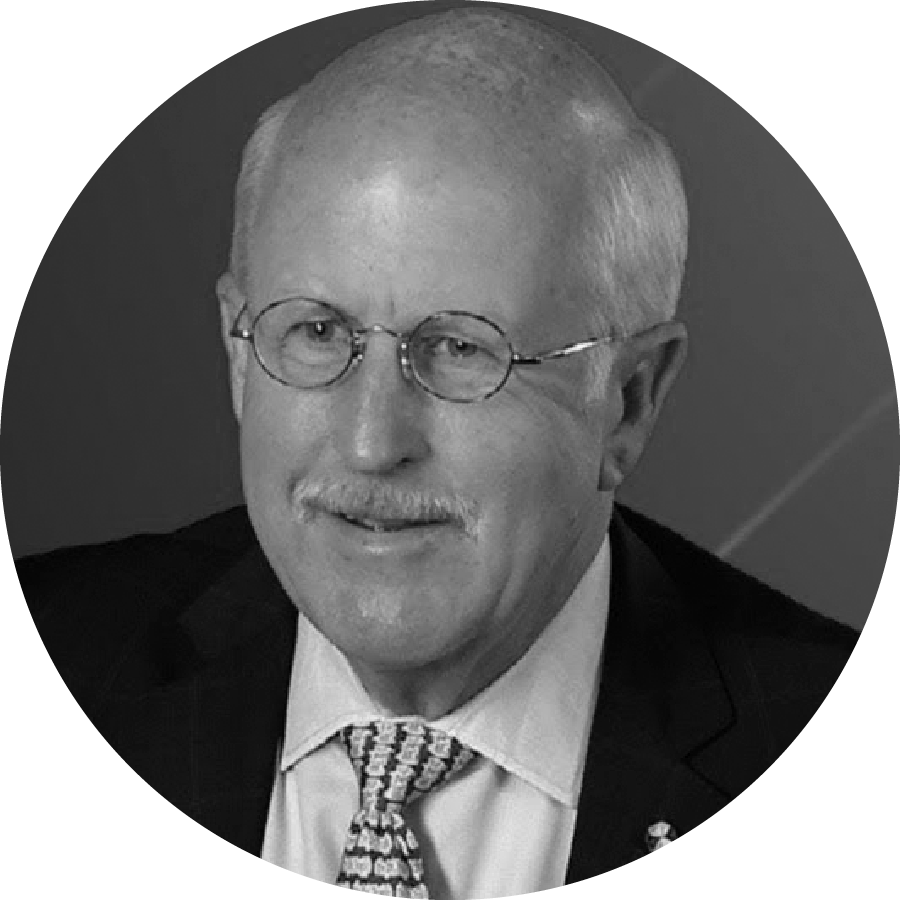
David M. Walker
President
Former Comptroller General of the United States
Former Public Trustee of Social Security and Medicare
Former CEO, Peter G. Peterson Foundation and Comeback America Initiative
Chairman, Federal Fiscal Sustainability Foundation

Les Rubin
Treasurer
CPA, entrepreneur, and commercial real estate developer
Founder, Main Street Economics
Author, The Greatest Ponzi Scheme on Earth and Why You Should Give A Damn About Economics
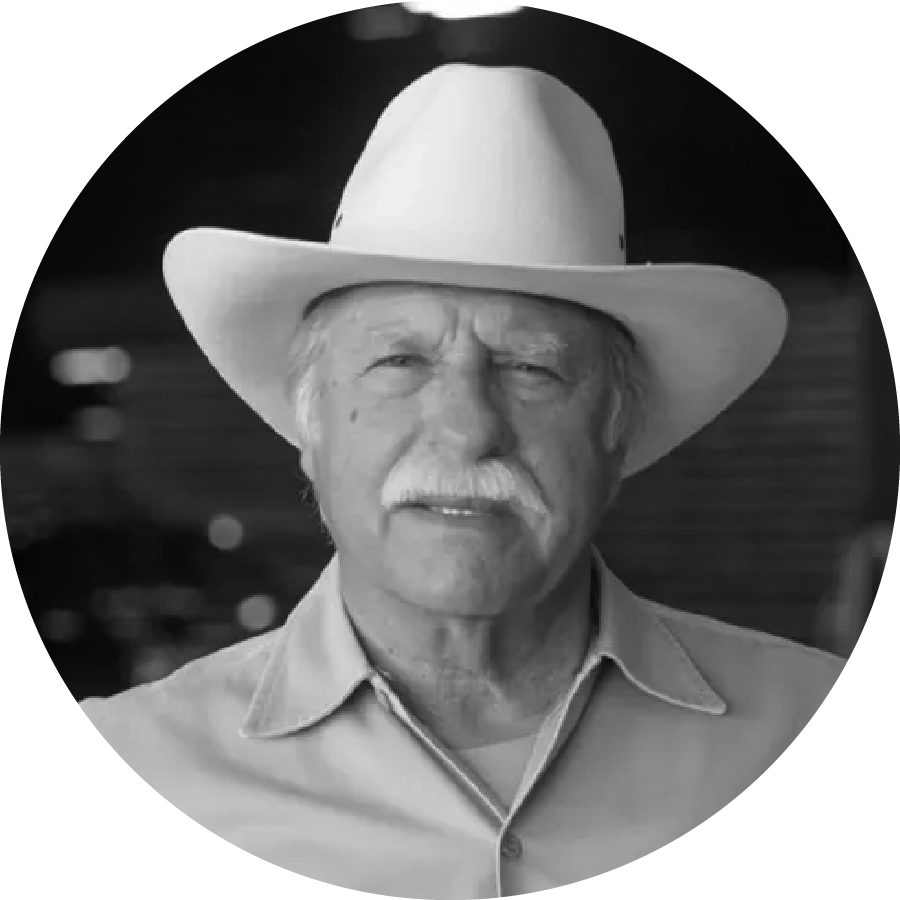
Joe Penland, Sr.
Vice President
Founder and CEO, Quality Mat Company (founded 1974)
Founder, JoeFromTexas.com (2022)
Sponsor, 2024 Tucker Carlson Live Tour
Co-author with David M. Walker of a book on saving Social Security, with a national tour in 2026 and 2027
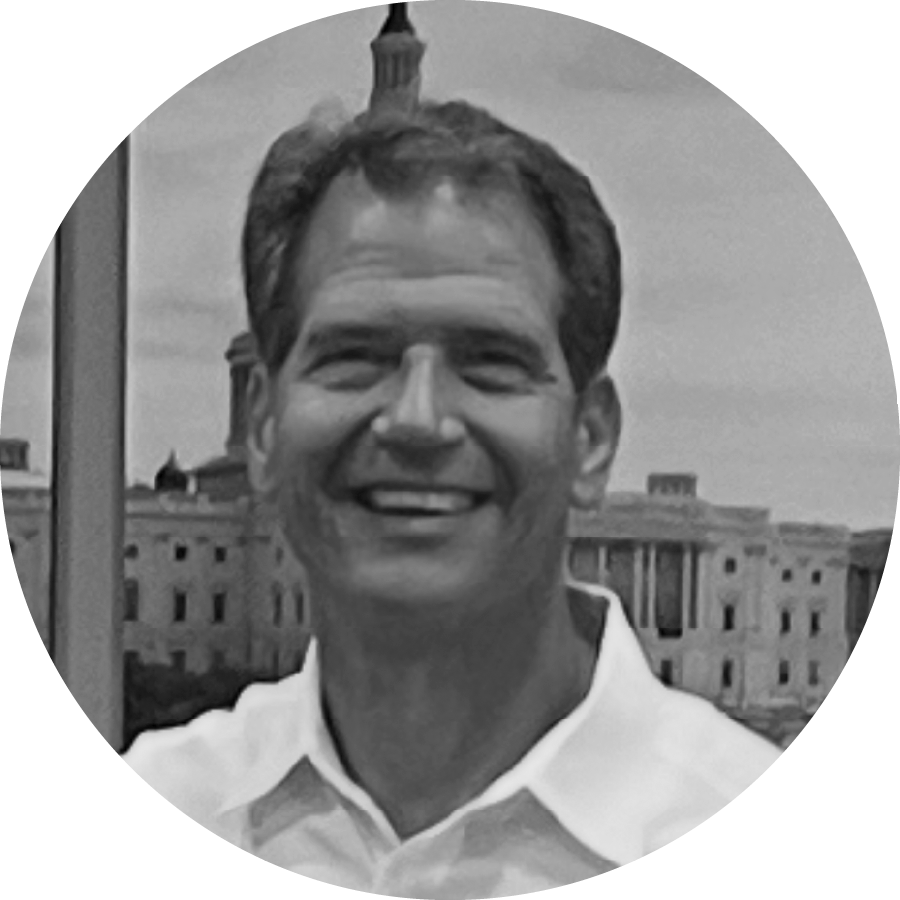
Robert Brian Walter
Secretary
Disciple of Jesus Christ on all things
Oklahoma business owner since 1995
Founder, Unity Above Self in America (2018)
Disciple of former Senator Tom Coburn on government reform
Champion of No Budget, No Pay